Invitations & Save the Dates
Wedding Invitation Wording: Formal to Casual Examples

Your design is chosen, the date is set, and the hard part should be over. Then you click into the wording and there's the blinking cursor.
The blank invitation can feel weirdly high stakes. Suddenly you're deciding who is "hosting," how formal you sound, and whether "dinner and dancing" is charming or cheesy. Your mom has an opinion. So does the group chat.
You can borrow a template, but the best wording usually comes from understanding what each line is there to do. So that's where we'll start, then we'll dial the tone up or down and show you five finished versions of the same wedding, from black tie to backyard.
What goes on a wedding invitation?
Start with the seven lines doing the real work. Once those are right, the rest is style.
Ana and Luis Torres
invite you to celebratethe marriage of their daughter
Maya Elena TorresandDaniel James Okafor
Saturday, September 16, 2028at 4:30 in the afternoon
Hollis HallColumbus, Ohio
Dinner and dancing to follow
Kindly reply by Sunday, August 6
Host
Says who is inviting.
Our rule: Name only the people really hosting. If that's complicated, "Together with their families" covers it.
Request
Asks guests to come.
Our rule: One line, matched to the formality you picked.
Names
Says who is getting married.
Our rule: Full first and last names, unless every guest knows you both well.
Date and time
Says when.
Our rule: Day of the week, date and start time. Words for formal, numerals for everything else.
Venue
Says where.
Our rule: Venue name, then city and state. Add a street address only if the place is hard to find.
Reception
Says what happens after.
Our rule: One short line. Skip it if there's no reception.
Reply
Says how and by when to answer.
Our rule: A real date and one clear way to reply.
Everything else (dress code, parking, hotels, the registry, the weekend schedule) is useful, but it isn't the invitation. It belongs on your wedding website, where guests can come back to it the week of the wedding.
And casual never means skipping lines. Even the most laid-back invitation still says who's hosting, what's happening, when, where, and how to reply. A relaxed card just says it in fewer words.
How do you make wording formal or casual?
Formal or relaxed is less about finding the perfect template and more about making three small choices consistently.
Switch 1
Who's speaking?
Third person sounds like an announcement. First person sounds like the two of you.
Switch 2
How is the date written?
A spelled-out date wants a spelled-out time to match.
Switch 3
How do you ask?
Pick one request line and let it do the whole job.
Make all three the same way and the invitation reads as one voice. Mix them and it sounds slightly off. A card that opens with "request the honour of your presence" and then says "4:30ish" feels like two people wrote it.
Fully formal wording comes with a few traditions of its own. "The honour of your presence" is kept for a ceremony in a house of worship, and "the pleasure of your company" for every other venue. "Honour" takes a u, and the time is written out, as in "half after four o'clock." If you love that tradition, follow it all the way. If you don't, you don't owe it anything, and "honor" is perfectly correct US spelling.
Wedding invitation wording examples, formal to casual
Every name, venue and date below is an example. All five word the same wedding: Saturday, September 16, 2028, with a caterer who needs a final count 30 days ahead. That puts the reply date on Sunday, August 6, eleven days before the headcount, so there's time to chase the stragglers.
Copy the one closest to you, swap in your own details, then read it out loud. If you trip over a line, so will your guests.
Mr. and Mrs. Luis Torresrequest the honour of your presenceat the marriage of their daughterMaya ElenatoDaniel James OkaforSaturday, the sixteenth of Septembertwo thousand twenty-eightat half after four o'clockSaint Anne ChapelColumbus, OhioReception to followKindly reply by Sunday, the sixth of August
Together with their familiesMaya Torres and Daniel Okaforinvite you to celebrate their marriageSaturday, September 16, 2028at 4:30 in the afternoonHollis Hall, Columbus, OhioDinner and dancing to followKindly reply by Sunday, August 6
Maya Torres & Daniel Okaforwould love for you to join themas they get marriedSaturday, September 16, 2028 at 4:30 p.m.Hollis Hall, Columbus, OhioDinner and dancing afterPlease reply by Sunday, August 6
We're getting married, and we want you there.Maya & DanielSaturday, September 16, 2028, 4:30 p.m.The Torres family's backyard, Dublin, OhioFood, drinks and a long night afterLet us know by Sunday, August 6
Maya and Daniel are getting married.Saturday, September 16, 2028, at 4:30Hollis Hall, ColumbusDinner after. Please reply by Sunday, August 6.
Notice what stays the same in all five. Every version has names, a date and time, a place, what happens next and a reply date. Only the voice changes.
How do you word the host line for modern families?
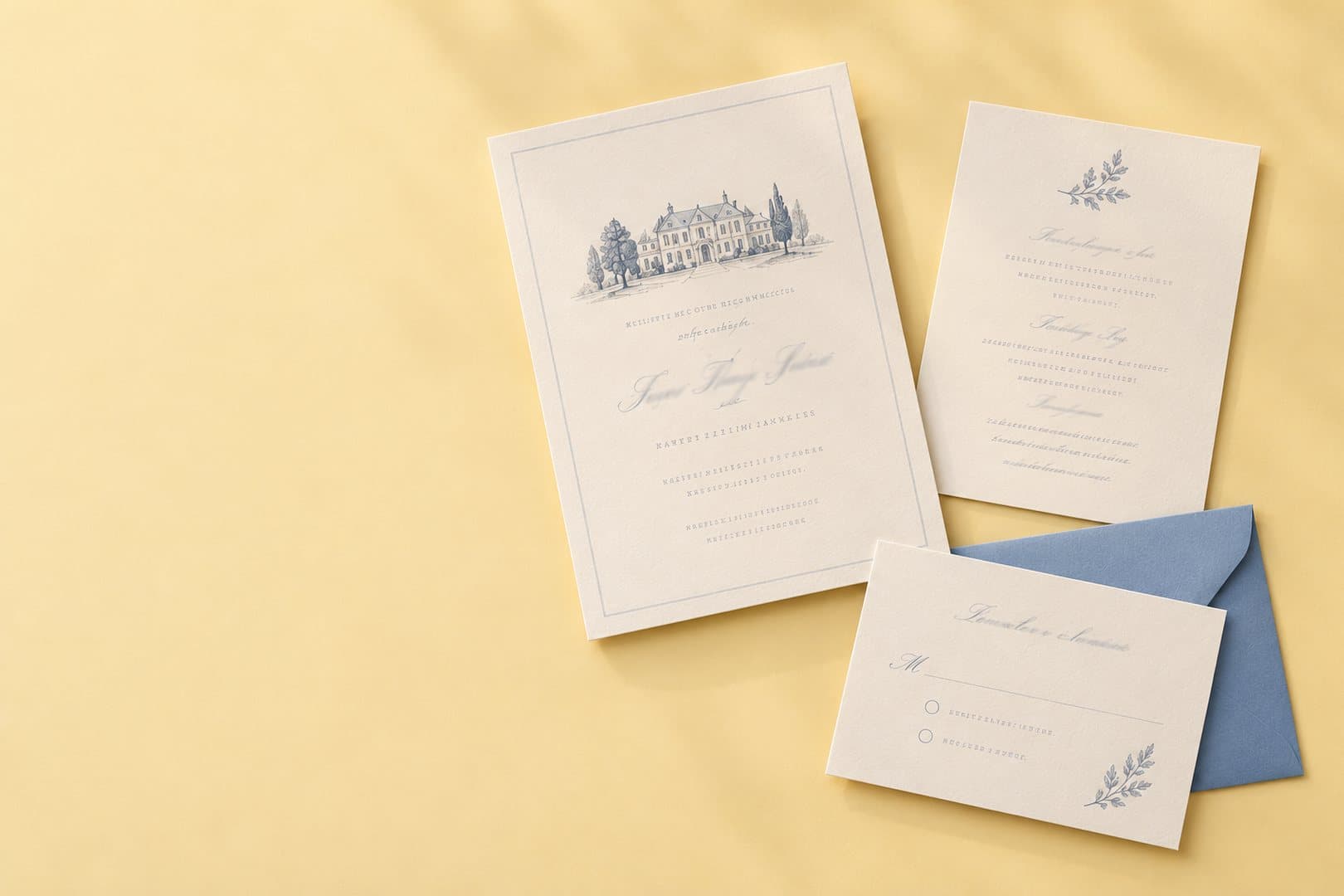
This is the line that starts family debates, so here's the rule that ends most of them: name the people who are really hosting, and no one else. The host line has a job, and it isn't listing everyone who matters to you.
If your parents are hosting, name them. If you're paying for most of it yourselves with help from family, "Together with their families" is honest and warm, and it saves you from deciding whose name goes first. If the two of you are hosting, start with your own names.
Divorced parents who are both hosting each get their own line, with no "and" joining them, since "and" on an invitation signals a married couple. A stepparent can share a line with the parent they're married to.
A parent who has died isn't named as a host, because hosts are the people issuing the invitation. You can still honor them right after your own name ("son of Ana Okafor and the late Samuel Okafor"), or in a note on your website, where you have room to say more.
Before you print or send anything, show the host line to everyone named in it. That one conversation prevents most invitation hurt feelings.
Why we write invitation wording for a phone screen
Your invitation may be beautiful at full size, but plenty of guests are going to meet it on a phone screen first. A digital invitation arrives by text, and even a printed card often ends up as a photo in the family group chat.
That changes the math. On a small screen, every line you add makes the others smaller or pushes them out of view. So hold each line to one test: does a guest need this to decide whether they can come? Names, date, time, city and reply date pass. Hotel blocks, dress code paragraphs and the brunch schedule don't.
Two small habits help. Write the date with the day of the week, so nobody has to check a calendar. And give one way to reply, with a real reply date. Offering three channels mostly gives people a reason to put it off. Our guide to RSVP wording and deadlines shows how to pick that date.
If your invitation is digital, you get more room without crowding the card. With Vowfly, you choose a design, guests tap the card to open it and reply right from it, and you can add a short note that appears just under the card. Longer details go on your free wedding website, which uses the same design.
What should you leave off the invitation?
Leave off anything that might change, anything about gifts, and anything that needs more than one line to explain.
- The registry. It never goes on the invitation itself. Put it on your website, where guests will look for it anyway.
- Long logistics. Parking, shuttles and hotel blocks change, and a printed card can't be updated. A website can.
- Adults-only rules in fine print. Address the invitation only to the people invited, then say it plainly on your website. A clear, kind sentence beats a vague hint.
- A second request line. "Save the date" and "you're invited" on the same card contradict each other. Pick the one that matches what you're sending.
Wording is only half of the invitation. The other half is timing: send invitations 9 to 12 weeks before the wedding, with replies due 10 to 14 days before your caterer's final headcount. Our guide on when to send save-the-dates and invitations walks through the math.
Start with the reply date, then read it out loud
Write your reply date first, since it's the one line with a real deadline behind it. Then settle the host line with the people in it, and the rest really is filling in blanks: pick formal or relaxed once, keep every line on that side, and use "Together with their families" whenever hosting gets complicated.
Then read the finished card on your phone. If the names, date, place and reply date fit on the first screen, it's done. Anything that didn't fit goes on the website, where guests can find it again.
When your wording is ready, create your invitation with Vowfly for free and share it by text from your phone. Guests reply right from the card, and the same design carries over to your wedding website.